A few weeks ago I wrote about the French author, Eugène-Melchior de Vogüé, whose stories I’ve translated (at least, a few). Today I’ll give you some titbits on de Vogüé’s contemporary and fellow countryman, Catulle Mendès, a turn-of-the-century writer who believed in the wonder of imagination to help readers through the barren polluted landscapes of modernity.
Catulle Mendès, poète écrivain
Some years ago while on holidays I translated a book of short stories by Mendès called Bluebirds (in English), which was a rejigging of his collection Les Contes du rouet (Spinning Wheel Stories). It was an enjoyable time-filler and since then I’ve submitted several of the translated stories to literary journals and had them published. Many of them are available online for free! (See my list of his stories and click on the titles to see which ones are freebies.) Once you’ve read them you’ll probably want to know more about Monsieur Mendès. What sort of man wrote these witty fantasies?
A brief bio: Abraham Catulle Mendès was born in Bordeaux, France, in 1841, to a Portuguese Jewish father and a French Catholic mother. He moved to Paris at 17.
His first marriage was in 1866 to Judith Gautier, a daughter of the poet and novelist, Théophile Gautier. Théophile did not attend the wedding, having heard that Catulle had had an earlier mistress and children and was a man of uncontrolled lust.
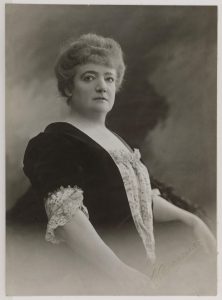
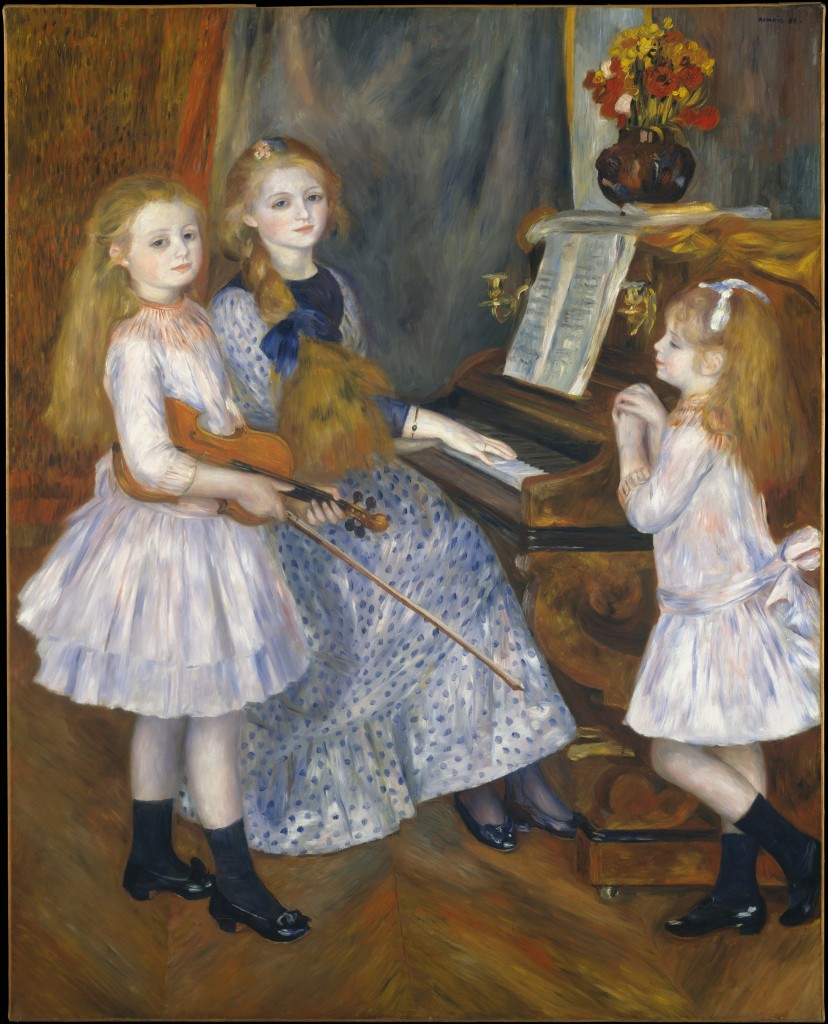
Judith and Catulle separated and Catulle returned to his mistress, Augusta Holmès, a prolific composer who also had time to give him eight children during and after his marriage to Judith. Three of them are portrayed in a famous painting by his friend, Auguste Renoir: The Daughters of Catulle Mendès (1888).
Augusta Holmès, 1880s, Photo by A. TaponierThe Daughters of Catulle Mendès, Auguste Renoir
In 1897 Catulle Mendès married again. His bride was Jeanne Mette, 30 years his junior, who gave him another son. I’ve read unconfirmed reports of other mistresses and other sons…
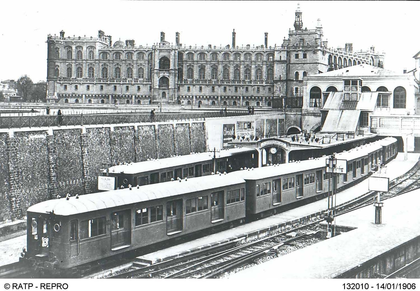
He died in a horrific accident in Paris in 1909 when he apparently inadvertently stepped out of a moving train and fell partly onto the track and under the wheels. His body was discovered near the Saint-Germain railway tunnel the next morning.
Gare Saint-Germain-en-Laye, c 1906
He has been described as versatile, prolific, superficial, a poet, critic, novelist and writer of fairy tales and licentious stories. As a young writer newly arrived in Paris, he started a few small magazines in which he pushed the boundaries of decency and published immodest writings that landed him in jail for a while. I don’t tend to translate these.
Catulle Mendès chez lui, courtesy Wikipedia
Yet he was a clever phrase turner and many of his other stories are above board; I’m always tickled by his quite decent fairy tales. Mendès said he treasured fairies, particularly when real people seemed to be so nasty and stupid…
The old fairy tales of Perrault and the Grimms often have a moral for the child reader tacked onto the end, as in, say, Little Red Riding Hood. But Mendès doesn’t need to spell out his message; we readers understand by the end of each of his tales that when the world offers nothing but violence, ugliness and trivialities, we can use our imagination to embellish life and make it bearable. As he says:
Who then would assume the task of writing fairy tales if he didn’t have the right to transform, in the course of his stories, the most hideous women into young ladies, dazzling in their beauty and attire? We all know that, in our tales, the more repulsive one is at first, the prettier one will be later. (From ‘The Three Sowers’, in ‘Les Contes du Rouet’, Catulle Mendès, my translation)
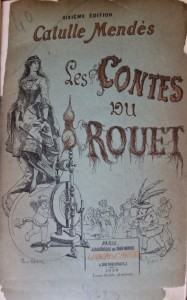
Cover of Les Contes du Rouet (Spinning Wheel Stories)
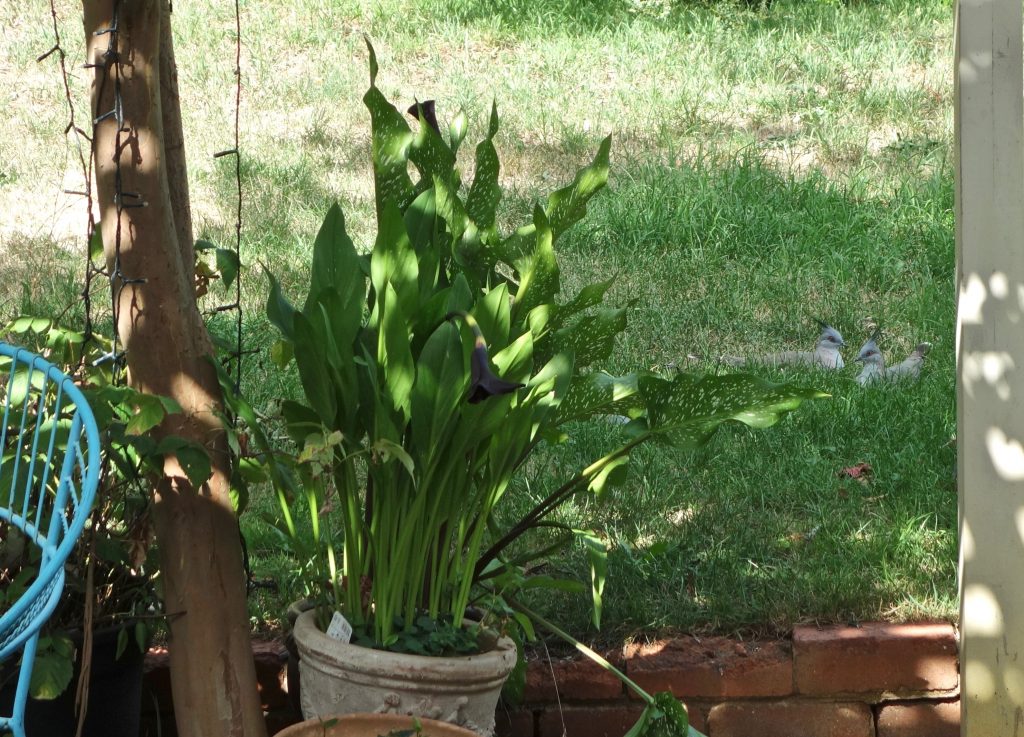
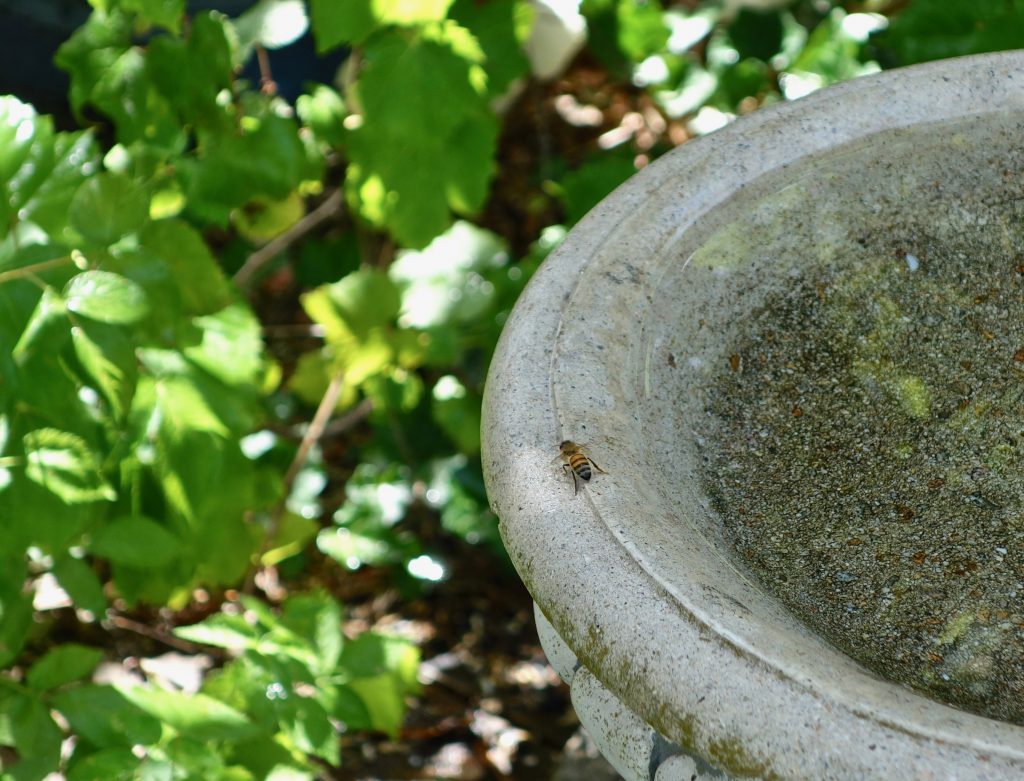
It’s presently the fourth day of 40+ degrees celsius outside and 30+ in my house and I’m too weary to translate stories, a task that requires a cool unflustered mind. But I can show you what it’s like at my place in this heatwave where even the birds and bees are too hot to fly…
A crested pigeon pair beside the wilting zantedeschia lilyA bee that seems to be sucking moisture out of the concrete bird bath that I’d just filled.
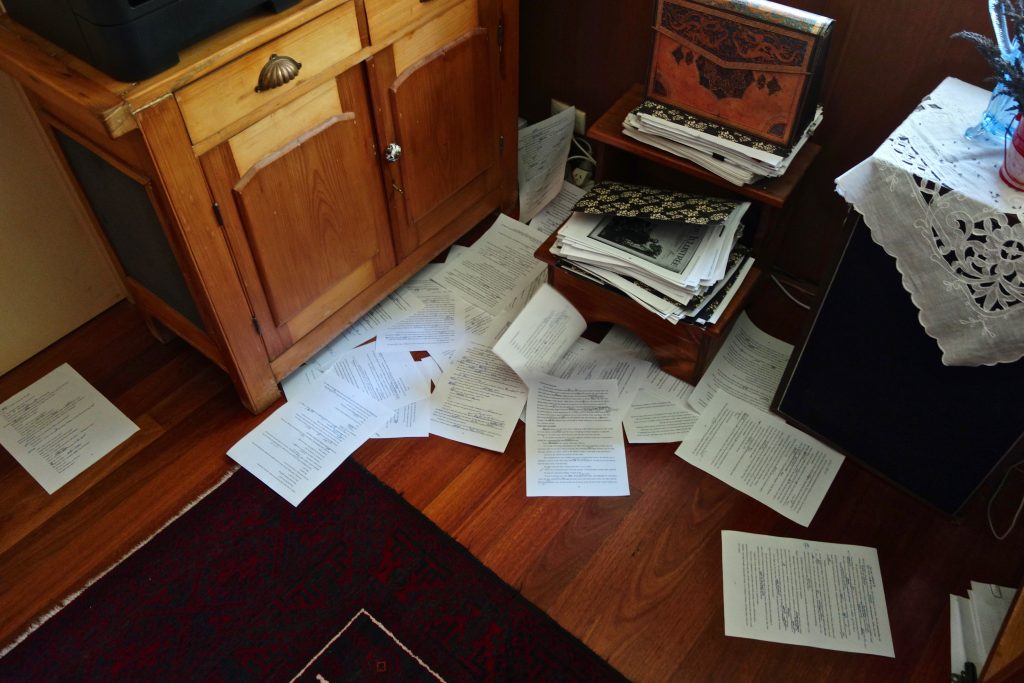
As the temperature climbed this afternoon, I started to melt, and turned the fan on without a thought for the consequences. I might as well have cast my neatly stacked, unbound manuscript to the wind…
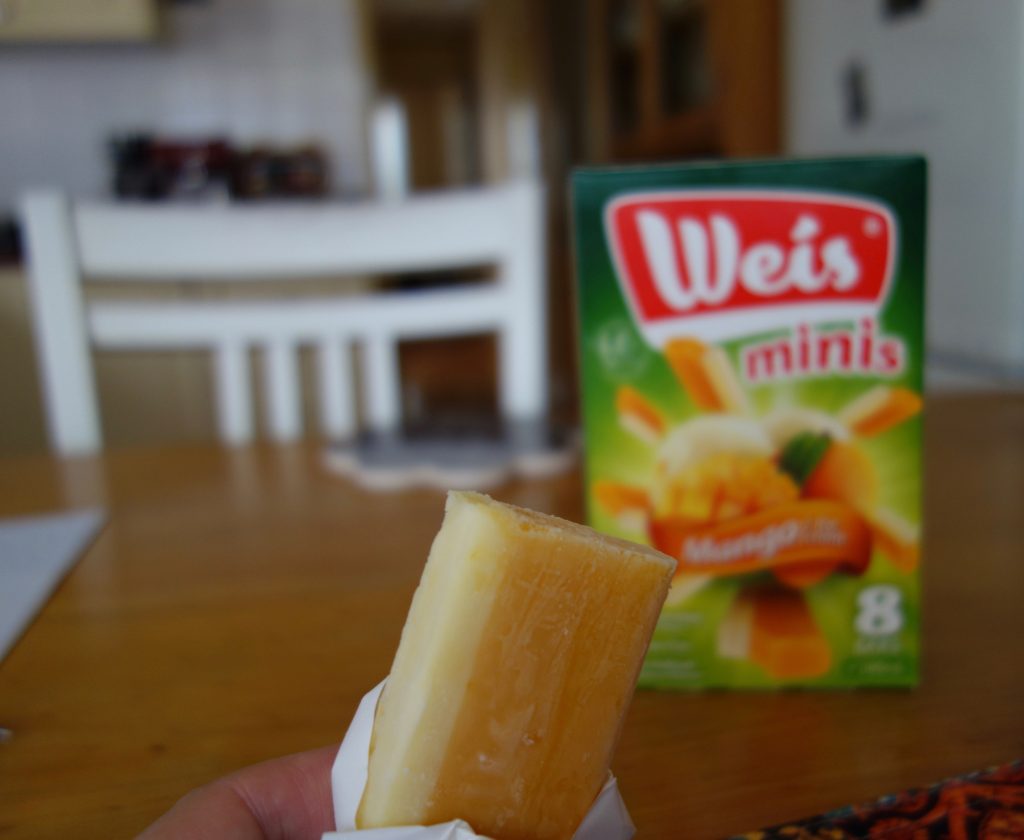
Too hot and bothered to face this papery mess, I retreated to the kitchen to find something cold. The fridge is a friend on days like these, and as I opened its door, the freezer offered up a consoling box of Weis bars that I’d bought to take me back to my Queensland childhood.
While the disorderly manuscript was waiting on the floor for me to cool down, the ever-turning fan blew even more pages down onto the pile. I picked it all up and dumped it on the lounge, to deal with in the cool of the evening (which this week has been about 3am). Fortunately the pages are numbered, a trick I once learnt after dropping a longish story, its pages loose and unnumbered.
It’s now 7.30, the light is failing, it’s 30 degrees out and 30 in. My house holds its heat, a desirable eco feature in winter but not in a summer heatwave. An hour ago the sky clouded over, and out of it some pathetic rain drops fell for a few minutes and stopped.
For the past eight years I’ve been translating the writings of a small handful of French authors, and I’ve come to know them quite well.
On my ‘Translated Short Stories’ page (see above) there’s a list of titles mostly from 19th-century metropolitan France, with a few from 21st-century New Caledonia. I took a look at the groupings under author names, and realised that readers might like to know more about each individual writer. So, here I go: today I’m starting with Eugène-Melchior de Vogüé.
It’s been many years since I first translated his stories, yet I still enjoy them today. He’s an author whose books have sat, ignored, on shelves in bookshops and libraries, but they ought not to be collecting dust; they deserve to be read. His writing has taught me much about Russian and Middle-Eastern history that influences the way I hear today’s news from those parts of the world. In his fiction, de Vogüé makes me aware of what has changed, and what, unfortunately, hasn’t.
Portrait of Eugène-Melchior de Vogüé (with after-dinner cigar)
A brief bio: Eugène-Melchior de Vogüé was a viscount born in 1848 in Nice; he died in Paris in 1910. His father belonged to one of the oldest French noble families; his mother was Scottish. In his day Eugène-Melchior was famous for bringing the literature of Russian writers to French readers in his 1886 book, Le Roman russe (The Russian Novel). His introduction of Pushkin, Gogol, Dostoevsky, Turgenev and Tolstoy revealed to new readers the intellectual and spiritual richness of the Russian soul.
His love for Russian writing developed during his appointment as a French diplomat to St Petersburg from 1877 – 1882, and his interest really bloomed with his marriage to a Russian aristocrat in 1878, and with later time spent in Ukraine.
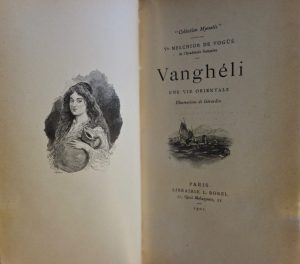
Previously he’d had diplomatic postings to Constantinople and Egypt and had written accounts of his experience there in various Oriental tales. ‘Syrie, Palestine, Mont-Athos’ and ‘Vanghéli’ were just two.
Vanghéli, E-M de Vogüé. A small book I’ve translated but not published.
But once he’d fallen in love with a Russian and Russia, de Vogüé developed a desire to help France, to save her from literary, political and spiritual crises. This desire is a thread running through all his writing. He believed his country could be saved by adopting the sentiments found in Russian orthodoxy, such as sympathy and love.
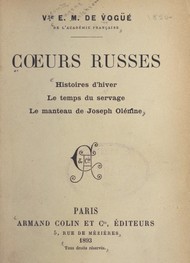
Coeurs russes, title page
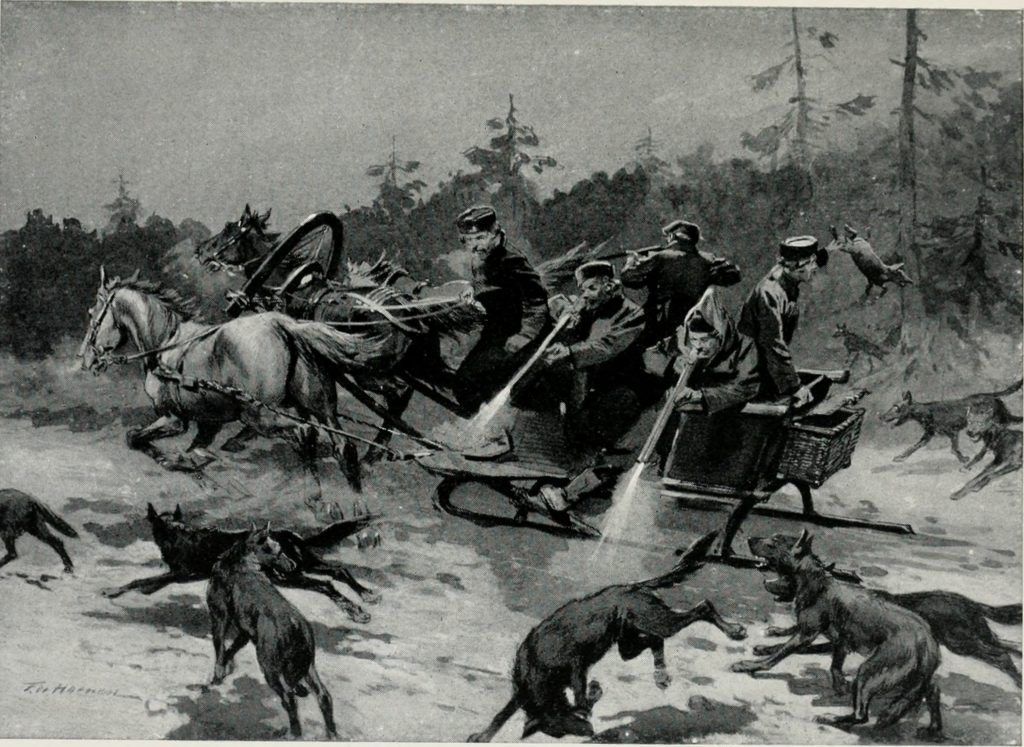
In 1884 he began publishing short stories set in Russia and Ukraine, in a style influenced by Turgenev. One I’ve translated and published, ‘Histoires d’hiver’ or ‘Winter Tales’ is a long short story that appears at the beginning of the collection, Cœurs russes (Russian Hearts). It’s a nest of short tales told to the narrator during his visit to a friend, Michaïl Dmitrich P— , a landowner who has invited him on a wolf hunt in provincial Russia.
A Wolf Hunt in Russia, c1913. Courtesy Wikimedia Commons.
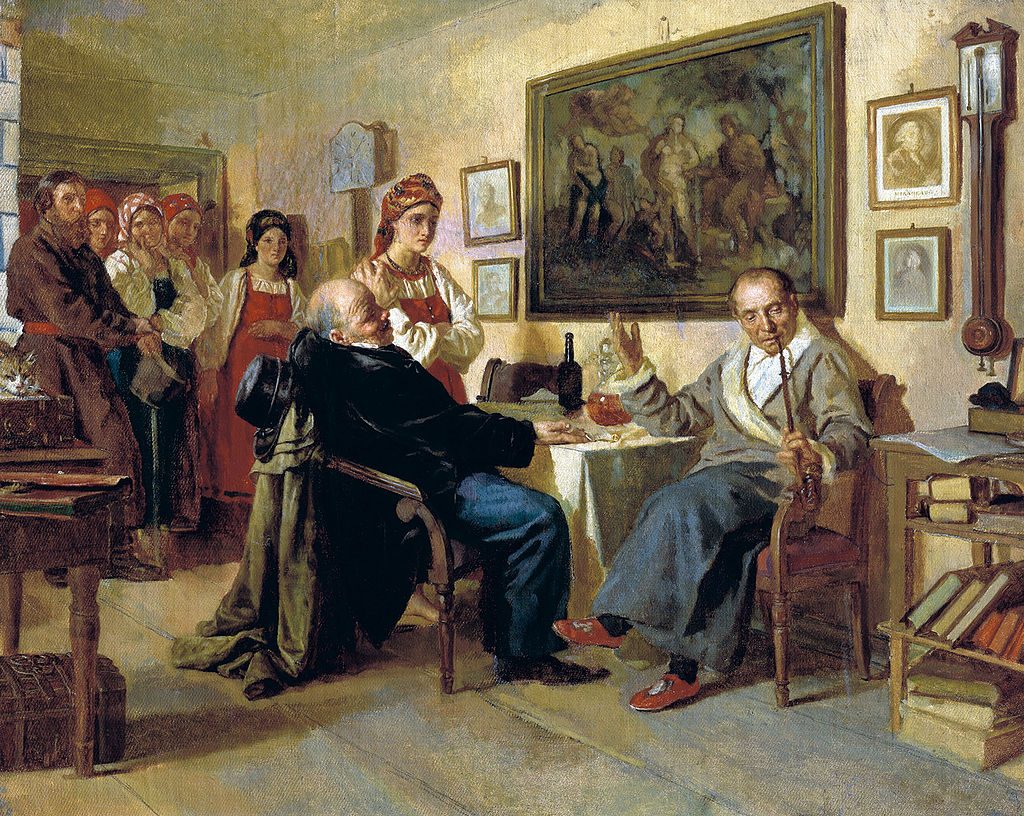
The hunt being unsuccessful that day, the two men return to the house and engage in a dialogue on the situation of peasants and former serfs now that serfdom has been abolished. Michaïl Dmitrich P— has recently retired on his inherited provincial property, where he “dabbled a little in agronomy with no great illusions about the results of such a pastime.”
Nikolai Nevrev, The Bargain. Sale of a Serf Girl. 1866. Courtesy Wikipedia.
Let me give you a taste of de Vogüé’s writing in this excerpt introducing Monsieur P—, a landowner and former serf owner:
He devoted himself to the study of economic questions, that is, he mulled them over, smoking his pipe and discussing them for entire evenings with the Maréchal de Noblesse or the justice of the peace. The first being a ferocious reactionary and the second a confirmed red, Mikhail Dmitrich had for each problem an authoritative solution and a liberal solution which prevailed by turns in his mind, depending on who had spoken to him the day before. When he was too troubled by the contradictions of social problems, Monsieur P— would read over a chapter from Kant or the ‘Introduction to Negative Synthesis’ by Professor Verblioudovich. His mind if I may say found a digestive aid in these readings, a mixture of something both soothing and lightly stimulating, of the kind an after‑dinner cigar provides. His intelligence enjoyed these vapours of thought as his body enjoyed the vapours of the Russian bath, in the lukewarm atmosphere which is neither water nor air, but a soft fog.
You can find this little ebook or paperback, ‘Winter Tales’ , at Amazon.
If you’d like a free taste of de Vogüé, my translation of his story, ‘Joseph Olenin’s Coat’ is available online at Bewildering Stories where you can read about a lonely man in a cold and isolated part of Ukraine, who loses a coat, finds one, and falls in love with it.
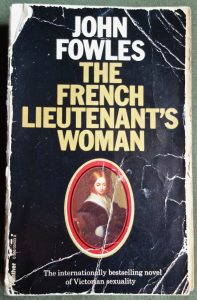
A prompt from booksaremyfavouriteandbest – Begin with The French Lieutenant’s Woman by John Fowles, let it trigger the memory of another book, and another and another until there are six.
I read The French Lieutenant’s Woman when I was about 23, couldn’t put it down, and even read it under my desk at work when no one was watching. I’ve obsessively watched the movie seven times. Sarah Woodruff, the protagonist, touched me with her helplessness as a rejected woman of a lesser class who couldn’t seem to rise above it in anyone’s eyes.
My much-opened copy of ‘The French Lieutenant’s Woman’
Here are the six:
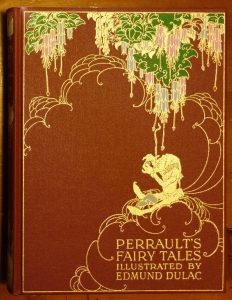
1. Bluebeard: It’s not a book, it’s a story in Perrault’s Fairy Tales, one of my Christmas presents, but here’s the connection: when I took the cover photo (above) for this blog post, I also took a photo of Perrault’s Fairy Tales to send to my son. As for the tale of Bluebeard, a story of a husband who killed seven wives for being curious, I was reading it at breakfast this morning, the first of 2019, while my neighbours were roaring at each other from either side of a locked door, the wife having driven her husband out of the house. He was shouting threats of a bashing while I was reading of Bluebeard’s threat to cut the throat of his eighth wife. Mrs Bluebeard was saved in the nick of time when her brothers arrived. My neighbour’s wife was saved by the police coming to take her troublesome husband away.
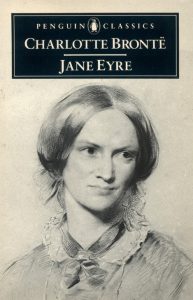
2. Jane Eyre: Thinking again of The French Lieutenant’s Woman, I see a connection with my neighbour in the housing flats across the street. They are both women of a lower socio-economic group. I’d been equally moved by the situation of Charlotte Brontë’s Jane Eyre, never good enough in the eyes of richer folk.
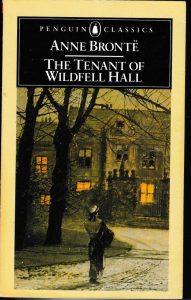
3. The Tenant of Wildfell Hall: This novel by Charlotte’s sister Anne Brontë was recommended by a student whose PhD I was typing.The story rang true to me, but you wouldn’t want to know why.
4. A Month in the Country: It was the same student, now a friend, who bought me the gift of a Folio Society edition of J. L. Carr’s A Month in the Country in a slipcase. Loved it. Read it twice. A former WW1 soldier tries to restore a church fresco while battling post-war trauma. Having learnt of my grandfather’s misfortunes in WW1, this kind of story appeals to me.
5. Fighting France: From Dunkerque to Belfort: This small book by Edith Wharton then came to mind. I bought it in October in the heat of the commemoration of the end of the ‘Great’ war. It deals with WW1 through a woman’s eyes. Wharton’s writing is exquisite.
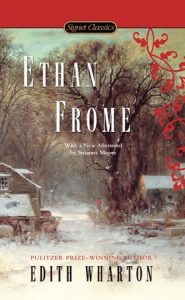
6. Ethan Frome: I’d earlier read another novel by Wharton, Ethan Frome. It blew me away. Her gift is the ability to evoke compassion in the reader, even for a character who is making a rod for his own back.
I was surprised and delighted to see The French Lieutenant’s Woman was the prompt book for this month. It’s been a favourite for so long that I was more than happy to play with it for “six degrees of separation”.