A rainy day story

Have you ever gone to a place for the first time because you read about it in a story?

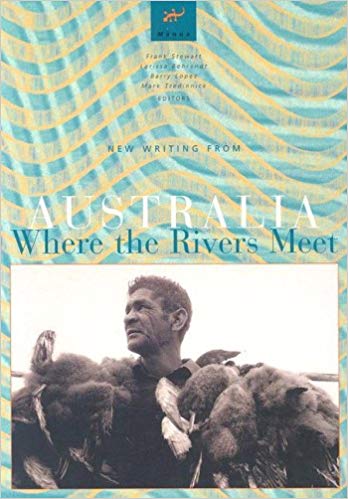
I recently read ‘On the Edge’ by an Australian writer, Ashley Hay. I came at it the long way round, beginning with ‘The Little Red Writing Book’ by Mark Tredinnick, a beautifully written, exceedingly helpful Australian book for writers who write like public servants but want to break away from that stilted language. Early in the book Tredinnick praises the writing of Barry Lopez, an American, and recommends Lopez’s writing about nature. So I went searching and saw Lopez’s name come up as an editor of ‘Where the Rivers Meet’, an Australian collection of short stories about our land, the nature of it, the history of it. ‘On the Edge’ was in it.
Ashley Hay wrote about the city of Wollongong, south of Sydney, built between the coastal mountains and the ocean and necessarily spreading north and south but never east or west. The whole city is ‘on the edge’ of Australia. She remembered being taken for a drive, as a teenager, along the road that once precariously hugged the steep cliffs prone to rockfalls, and compared it with the bridge that has replaced that road, the SeaCliff Bridge, a cantilevered serpentine bridge that follows the same coastline but in an open space over the ocean.

I tried to imagine it. I looked at the photos online, but I wanted to feel it, to see it.

Today, I’m in Wollongong, and am being driven to the bridge. It’s pouring, a deluge of rain that began at 5am and hasn’t stopped since. We’re on the bridge, three tourists in brightly coloured raincoats are taking photos of each other joyously holding their arms out as the rain beats down. Not another soul can be seen, and barely another car.  I’m not as bold as the tourists, I can’t get out and walk in this weather, so we continue along the road up to Bald Hill Lookout where the cloud is low and the wind is gusting and whoomping the car. The view is supposed to look as it does in this advertisement for the new seats by Outdoor Design :
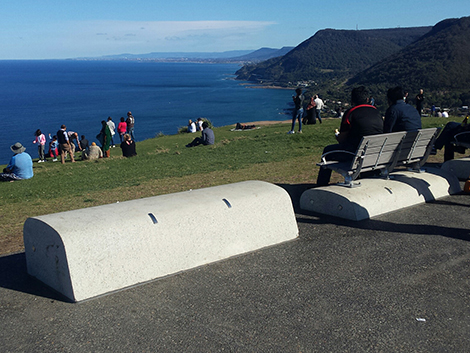
Bald Hill Lookout, photo courtesy https://www.outdoordesign.com.au/

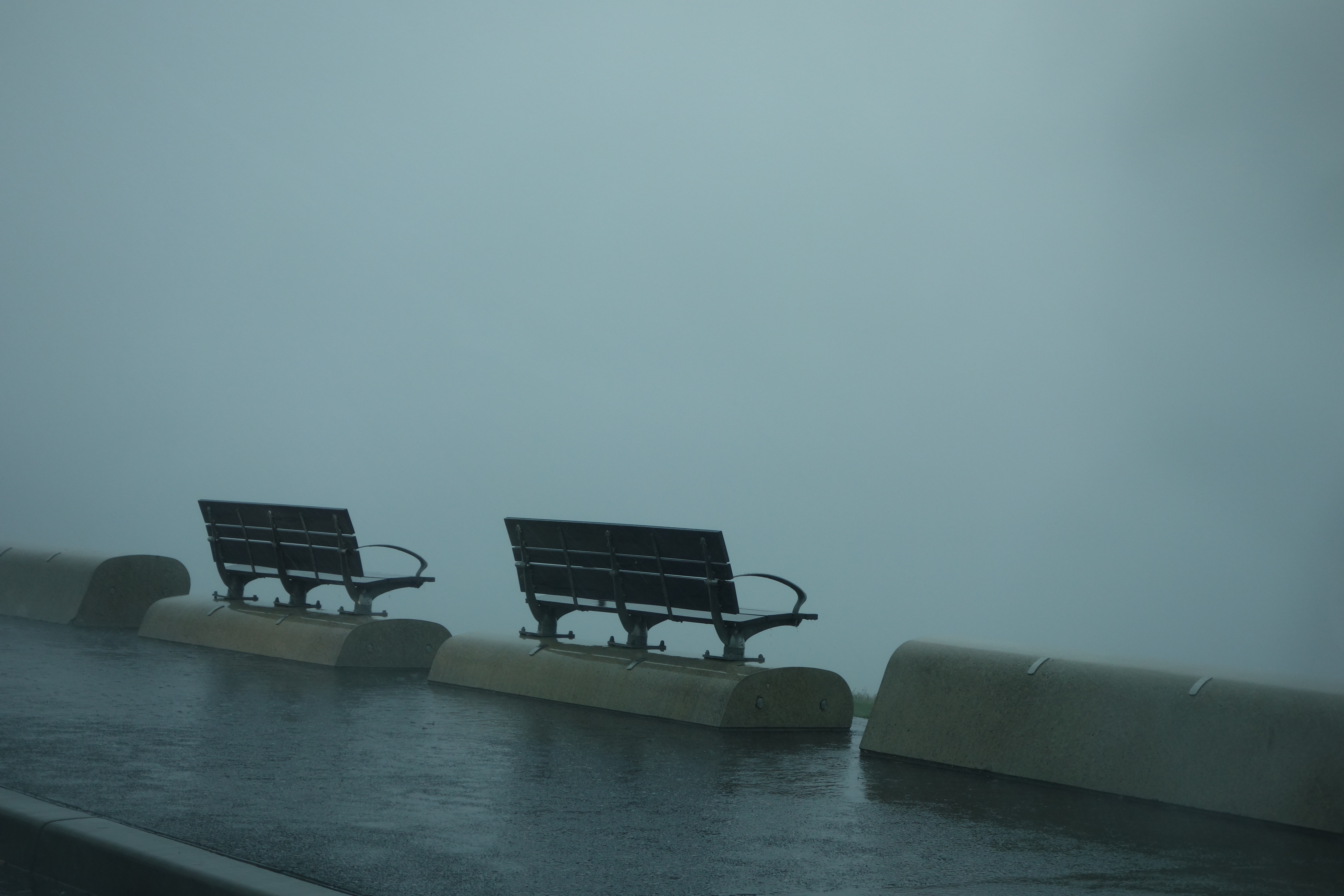
But today the view looks like this:

The sea is invisible, can’t open the windows, no point staying. We turn back towards the bridge and search for a place to stop so I can get out, stand still, and take in the view of this bridge I have only known in a story. The car parks are some distance away but I want to see what it’s like to walk on the bridge. I’ll need to take a photo and won’t be able to hold my umbrella steady in this wind, let alone a camera. It’s too hard, I give up and take a happy snap through the windscreen of our moving car.
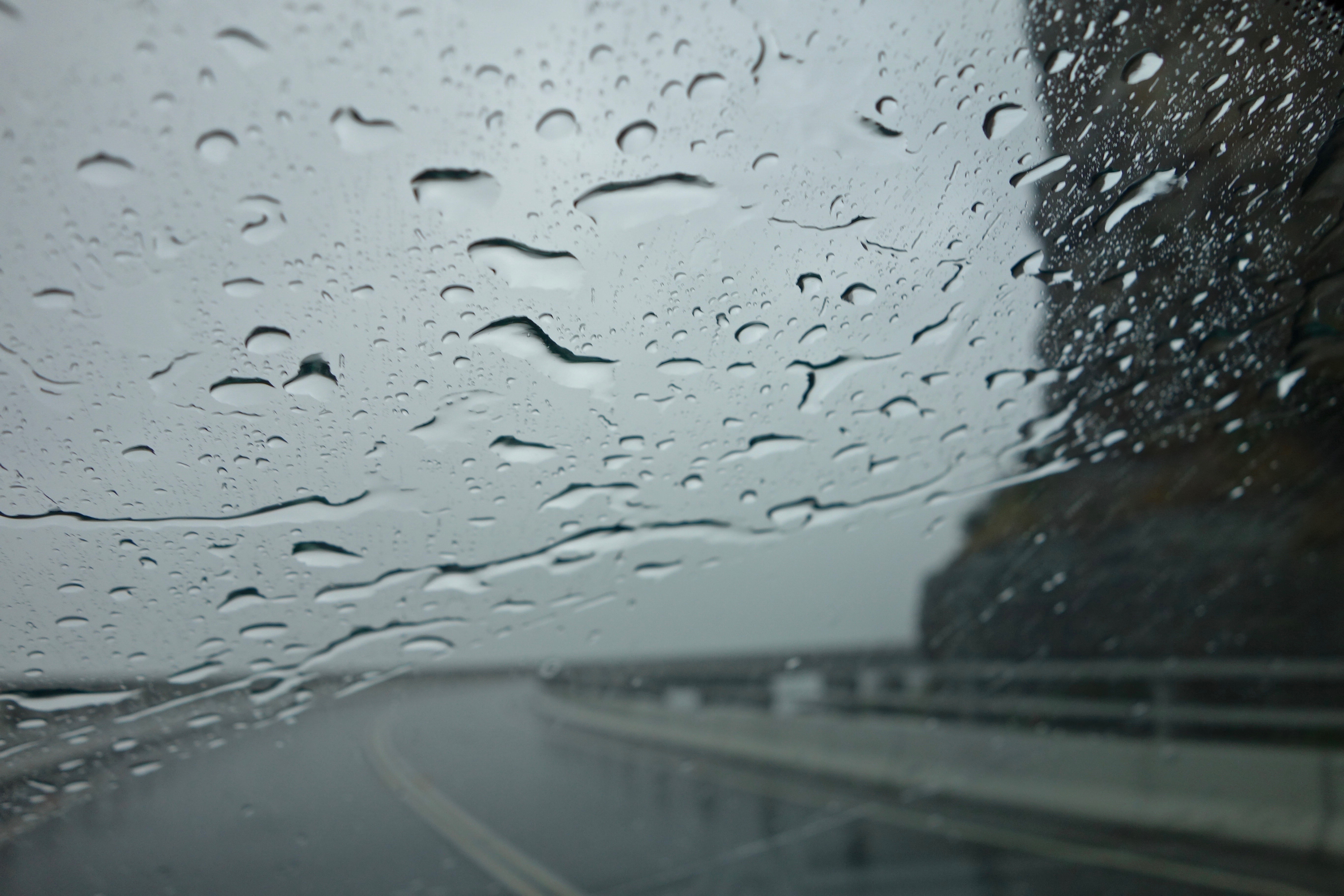
The view was so blurred by the torrents of rain that if I hadn’t seen photos of the SeaCliff Bridge I still wouldn’t know what it looked like. So what have I gained by wanting to get inside someone else’s story?

Perhaps tomorrow will not be a rainy day.

*

The Wolf

Today I can say, at last, that my translation, ‘The Wolf’, by Marcel Aymé, has been published by Delos Journal at the University of Florida.

I came across the original story, ‘Le Loup’, one lunchtime as I was eating my sandwich in the sun. It’s rare for a story to keep me reading all the way to the end in one sitting, but ‘Le Loup’ did it for me. When I’d finished the story, and my lunch, I began translating it immediately.

That was a couple of years ago. Publication of the piece has been a long time coming. In the world of literary translation and publishing (or any writing and publishing really), progress is often at snail pace and this is a good example.

First there was the enquiry to the French publisher, Gallimard, to see if the rights to publish a translation were available.

Months passed without a response, but prompting them brought a yes.

Second, there was the submission to journals. Many journals said No. But Delos said Yes! That was two yeses!

Then it was back to the French, who in turn had to put the question to the rights holder of Marcel Aymé’s estate. It was the beginning of a looooong negotiation process to buy the rights. Three months I waited, anxious that the journal might give up. There was no response.

But the journal editor, bless her, offered to write to the French publisher on my behalf. And I suppose it’s not surprising that she was answered tout de suite…

Weeks passed again while we waited for a response from the rights holders. Finally they quoted a price so high that I was sure my translation would really never see the light of day.

Now, in the world of literature there are people who care, good people, and one of them came to my rescue with some of the funds, but it wasn’t enough. I scraped together a bit more, and made an offer to the French. And waited. Again. The journal deadline came and went, I had no response to my (low) offer, and Delos and I agreed to drop the whole project.

Then, that very night, there was a miracle. The rights owners accepted my figure, and it was full steam ahead for ‘The Wolf’.

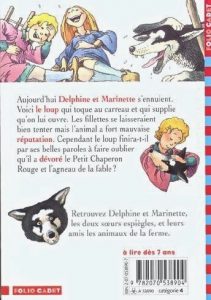
The editor offered to find an illustrator for the story, and with my childlike adoration of illustrations, it was a bonus thrill for me.  Most French editions are illustrated with sweet images like this one showing three good friends hugging, laughing and trusting one another:

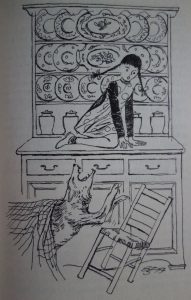
And in a past translation of ‘Le Loup’, there was even an illustration of an incident which never occurred in the story. The translator had partly tweaked the narrative to protect little readers from the truth that wolves are carnivores. In reality, the wolf didn’t miss out, he got lucky, and the girl was not dark-haired but blonde, because wolves prefer blondes:

Illustration by Geoffrey Fletcher, 1954

But for the Delos issue, the editor’s daughter drew a terrifying image in pen and ink of the wolf chasing two small girls, which now accompanies my new translation. I can’t show you; it’s in the journal which is behind a paywall. But I read some pieces from archived issues when the journal was free, and can recommend it. The table of contents for the latest issue is here.

The next translation to be published will be a whole book of stories from the Belle Époque, currently being prepared for publication by Odyssey Books. Again, it’s taking a long long long time. Early next year I expect it to come out. I’ll keep you posted.

*


Digital family history and the centenary of the armistice

It’s because of the advent of digitised records – birth, death, marriage and war service records – and family tree web sites, particularly Ancestry, that I know now what I didn’t know a short time ago. I’d heard about my father’s time in Egypt as a WW2 soldier and I’d heard about his own father’s time in France as a WW1 soldier.

But I’d never heard of the family members who were killed in action.

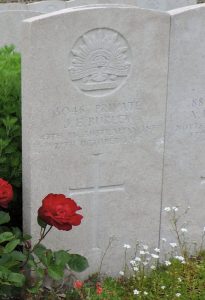
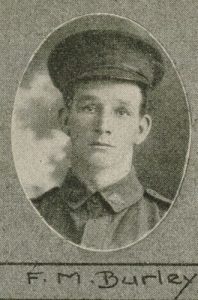
My grandmother had two cousins, the Burley brothers, James and Frederick, who were killed in Northern France.

Can you imagine losing two sons who voluntarily went to war?

Now imagine losing three sons.

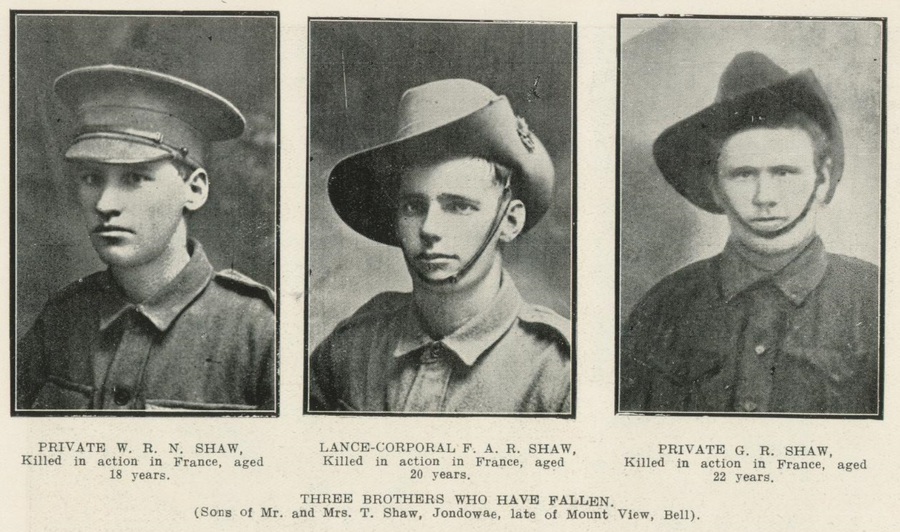
My grandfather had three cousins, the Shaw brothers, George, D’arcey and Frank, who were also killed in Northern France.

D’arcey, Frank and George Shaw (W.R.N. Shaw should be D.R.N. Shaw)

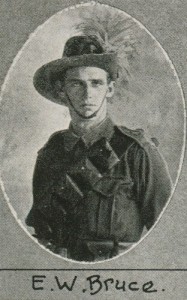
But because their cousin, my grandfather Ernest Bruce, survived gassing and a concrete wall falling on top of him, he returned to Australia to produce my father, who in turn produced me.

I’ve discovered most of this information through online records and family history websites. Many many family historians are using these resources now. This means that the great numbers of people commemorating the centenary of the armistice today, 11th November 2018, have learnt, like me, that they are the descendants of the ones who returned.

I have three sons. I feel absolute anguish for the parents who lost two or three of their children in war.

And I now have a greater appreciation of the struggles of Australians trying to build our nation a hundred years ago when the total population was 5 million, and 62,000 of their young people had been killed, and 156,000 were wounded, and many like my grandfather were unable to work again.

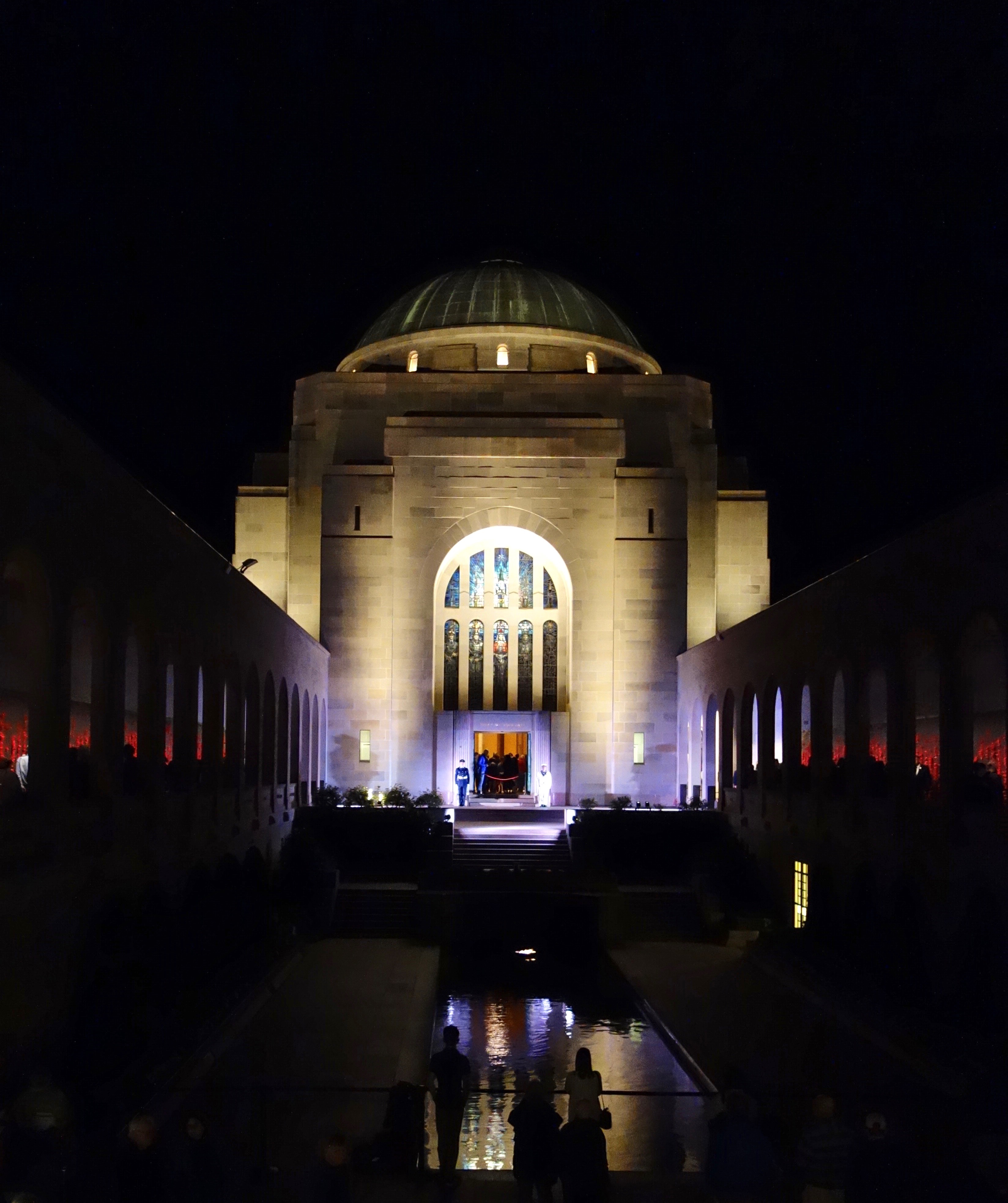
This building in the photo below, the Australian War Memorial, is ten minutes from my home. I’ve visited it countless times, and in the past few weeks as the crocheted and knitted poppies were displayed, and as I’ve read and heard so many stories from descendants of soldiers like me, I realise how fortunate I am that I have a comfortable home, enough food to keep me healthy, and a family that is gainfully employed. And I realise that WW1 was not the war to end all wars, there have been many wars since then, and I must not take my fortune for granted.

This new knowledge is greatly due to the digitisation of historical records, a technology I’m very grateful for.

Special open evening at the Australian War Memorial last night (10th November) for the centenary of the armistice

*


Six degrees of separation: Vanity Fair to Grimm’s Fairy Tales

Booksaremyfavouriteandbest invites us each month to find six degrees of separation between books. November’s starting point is Vanity Fair by Thackeray.

1.  I haven’t read Vanity Fair but the name of William Makepeace Thackeray immediately brought George Sand’s Spiridion to mind because Thackeray said, in relation to her novel Spiridion (that I translated), that she was “the most elegant writer, I think, that her sex ever produced.”

2. Thinking of Spiridion leads me to Cœurs russes (Russian Hearts) by Eugène-Melchior de Vogüé which I’ve also translated. It’s a book of short stories written by a French ambassador to Russia in the 1880s, set in Russia and written in the style of Turgenev and Tolstoy.

3. Now I’m remembering the pleasure of reading A Sportsman’s Sketches by Ivan Turgenev, especially the short story ‘The Tryst‘.

4. I’ve used ‘The Tryst’ several times when tutoring migrants in English because of its delicious descriptions. One student who enjoyed it has now asked for us to read Picnic at Hanging Rock together. I can’t believe my luck, I love this book.

5. Of course the images in my head now are from the movie of the same name, where floaty, pure, muslin-robed girls wander over forbidding boulders, as though returning to their fairy homes. This triggers a memory of Théodore de Banville’s story ‘L’Enfant bossue’ (The Hunchback Girl) in Contes féeriques (Tales of Faerie) about a convent girl who wants to return to her fairy parents.

6. I’ve got fairies on the brain, having translated a great number of French fairy tales in the last few years and read several illustrated books of Grimm’s Fairy Tales.

Four of these six books are collections of short stories, which says something about my translating life: stories are more likely to be accepted by publishers than novels. But they’ve made me love 19th-century literature even more.

*